

Transition Finance Weekly - June 25, 2026
Data Center Drama, End of Session Standoffs, and CA’s 72nd Trump Suit

1. Virginia Narrowly Averts Shutdown With a Data Center Compromise
Virginia’s budget standoff ends with an energy consumption fee on data centers. The politics of the data center boom are shifting fast, and Virginia’s resolution is an odd one.
Virginia lawmakers reached a budget deal this week that appears to have pulled the state back from the brink of a government shutdown, with a key piece of the agreement being a new energy consumption fee on data centers. The deal, which still requires Governor Spanberger’s signature, is expected to generate $600 million per year in revenue.
The mechanism matters. Rather than revoking existing sales tax exemptions — which data centers have long relied on and aggressively defended, and which Gov. Spanberger thought of as non-negotiable — the conference report landed on an energy consumption fee of $0.11 per kWh, up to a cap of $600 million.
To put the political context in sharper relief: those data center tax exemptions were worth roughly $1.9 billion to the industry in 2025, approximately 2% of the entire state budget.
Virginia’s data centers consumed 31 terawatt-hours of electricity in 2025. Despite this demand driving fossil fuel consumption, no new legislative agreements were made to ensure Virginia’s clean energy laws are followed.
This story fits squarely into a pattern we’ve been tracking: the rapidly shifting politics of data centers. What’s distinctive about Virginia’s situation is that data center demand is so concentrated (the state hosts more data center capacity than anywhere else in the world) that it has become a genuine fiscal and grid emergency. The question of who pays for load growth, who is on the hook for failures, and how clean the energy supply will be, is one that every major data center state is going to have to answer.

2. Alaska LNG Hits a Wall… For Now
The Alaska House rejected the Senate’s LNG bill. A conference committee convenes July 1.
Alaska’s legislature remains deadlocked on legislation to advance the massive Alaska LNG project, a proposed 807-mile pipeline connecting North Slope natural gas to proposed export terminals near Anchorage for sale to Asian markets. The Alaska House voted 12-28 to reject the Senate’s revised bill, which the Senate declined to abandon its own version by a 0-16 margin. The two chambers will now convene a conference committee to hash out an agreement beginning July 1.
In a special session called by Governor Dunleavy expressly to advance the project, neither chamber managed to pass a bill the other would accept, and Dunleavy himself declared the Senate’s version “doesn’t work” within minutes of its passage.
What’s quietly happening in the Senate is worth paying attention to: legislators there appear to be recognizing that a pure fossil fuel giveaway that showers the project with subsidies and tax breaks without ensuring sufficient benefit flows back to Alaskans isn’t politically sustainable.
Zooming out: In a world where no new fossil fuel infrastructure should be built if we’re to stay within a workable carbon budget, this megaproject is designed for export through the 2060s and beyond. On this critical front: the details of the deal matter less than what building it at all would unleash.
3. A New Framework for Home Resilience
Public Citizen lays out best practices for state resilience grants programs, and uses Louisiana as a cautionary tale.
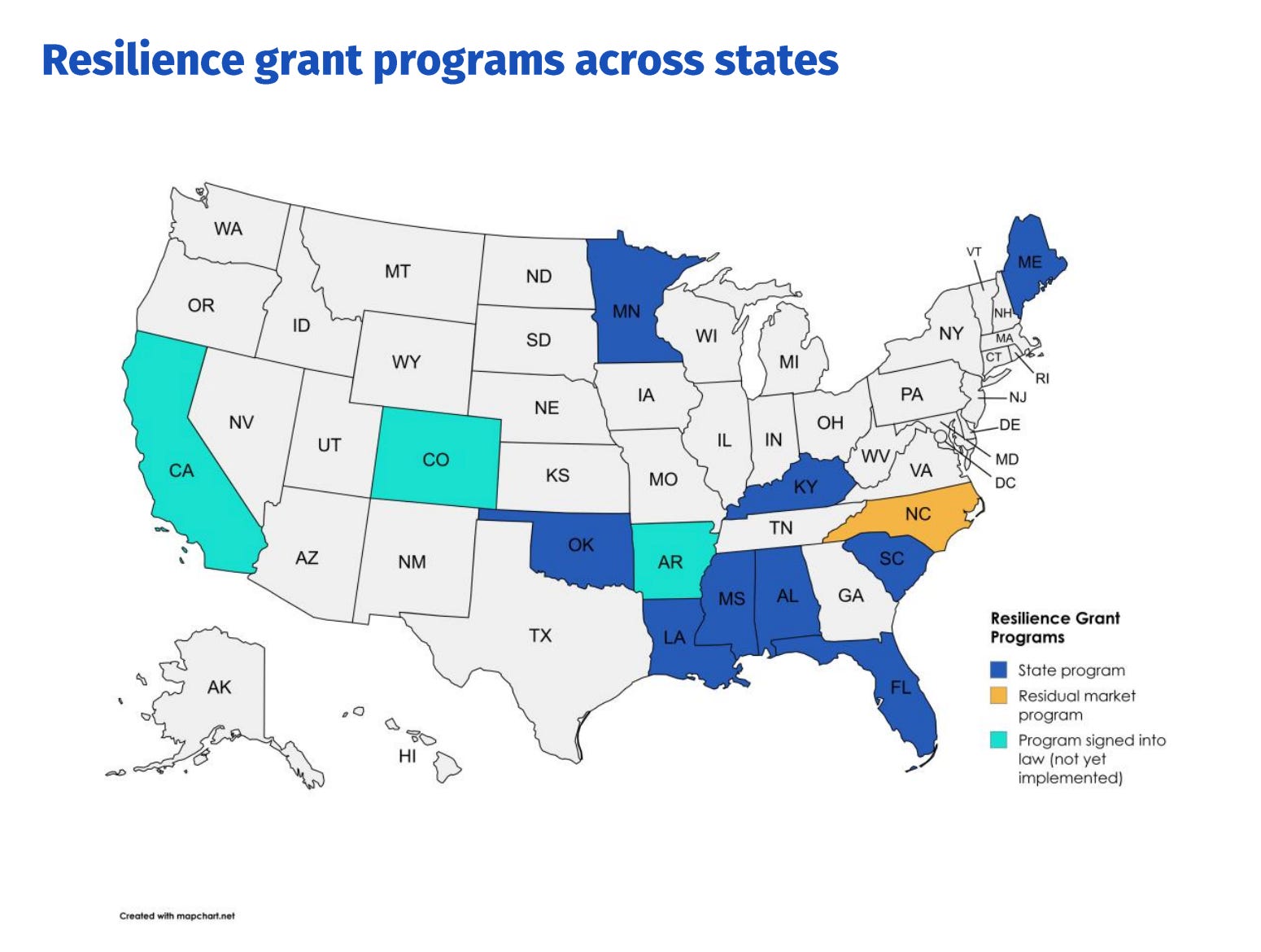
A new report from Public Citizen offers both a blueprint and a warning for states thinking about home resilience grant programs.
First, the good news: resiliency investments make homeowners and communities safer — and can make insurance more affordable.
However, the report argues that the insurance industry’s dominant response to climate risk (raising rates, reducing coverage, or exiting markets entirely) constitutes a market failure, and that states should step in to structure grant programs, like Alabama’s, that fund physical hardening of homes against climate hazards.
Design of these programs matters, and the cautionary tale here is Louisiana’s LA Fortify Homes program. The program excludes many of the most vulnerable homeowners: it isn’t targeted to those with the greatest financial need, requires homeowners to pay out of pocket for an eligibility inspection, and bars uninsured homeowners (roughly 20% of the state’s homes) from participating at all. At the current pace, advocates estimate the program would take until 2062 to retrofit just 25% of Louisiana homes. That is not a pace that matches the climate challenges the state is facing.
The insurance angle is one we’ve been tracking closely. Insurers are posting record profits even as consumers face skyrocketing premiums and diminished coverage. That gap between insurer returns and policyholder experience is exactly where the case for resilience investment is strongest. The money to fund better programs exists; the question is whether states will demand it.
Alex Martin of Americans for Financial Reform writes of the report,
“[T]here is low hanging fruit to address the climate-driven insurance crisis--fortified roof programs that protect homes against wind and hail damage--but many states simply don’t have enough fiscal space to fund them right now beyond pilots. The pullback of federal resilience resources is making things even worse. Wherever could we find the cash to fund these programs? Let’s follow Alabama’s lead and make the insurance industry pay into these programs.”
4. FERC’s Plan for Data Centers: States Need to Make a Plan
FERC’s new data center framework wins bipartisan praise. It also largely punts the hard work to regional grid operators and state regulators.
The Federal Energy Regulatory Commission approved a new framework this week to address the electricity demands of large loads (particularly data centers) by a 5-0 bipartisan vote. Reaction from groups including the Sierra Club and Advanced Energy United was broadly positive. The plan is essentially a menu of options, directing regional transmission organizations to develop their own rules for how to handle interconnection, cost recovery, and planning for large industrial loads.
The diplomatic read of this outcome is that FERC is appropriately directing regions to develop tailored solutions. The more candid read is that the commission has given states and regional grid operators the responsibility of solving a set of problems that are deeply political and technically complex, without resolving the underlying conflicts itself. As Politico put it, the Fed’s fix is: make states figure it out.
At the same time, a bipartisan House bill has been introduced to allow utilities to recover from large-load customers the costs of capacity expansions they trigger. That’s an important complement to the FERC framework, and an acknowledgement of what ratepayer advocates have long argued: if a hyperscaler’s new data center requires a $500 million substation upgrade, ordinary households shouldn’t foot the bill.
The order spotlit many of the biggest topics facing grid planners and rate regulators. One we’ll be watching: transmission planning. Transmission is a make-or-break variable for how the U.S. navigates both rising load growth and clean energy buildout, yet many grid managers have woefully inadequate processes that make new transmission expensive to build or upgrade.
As Former FERC Commissioner Neil Chatterjee wrote, “A very FERC-y approach!”
5. California Sues Trump Over EPA Power Grab
California AG Rob Bonta argues the Trump administration’s use of the Congressional Review Act to undo emissions rules is illegal on its face.
California Attorney General Rob Bonta filed suit this week against the Trump Administration over its use of the Congressional Review Act (CRA) to invalidate several Clean Air Act waivers, the state’s 72nd suit against the Administration.
The EPA this month unilaterally reclassified the long-standing waivers, which allow California to set stricter emissions standards as rules. “Rules” can then be subject to the CRA, which allows Congress to vote to overturn them. A successful suit would reinstate these particular California regulations (which affect automakers and polluting lawn and garden tools) and put guardrails around the administration’s use of the CRA as a regulatory wrecking ball.
This reclassification is a subtle but powerful attempt at a power grab by the EPA. The precedent is clear: over 75 waivers have been granted by both Democratic and Republican Federal administrations. These waivers have been crucial to protecting public health, driving forward clean transportation, and cleaning California’s air.
California Air Resources Board Chair Lauren Sanchez said,
“Using the Congressional Review Act this way is illegal. It puts the health of millions of Californians at risk by compromising our ability to meet national air quality standards and could cut off critical transportation funding that our communities and businesses rely on. California will not stand by idly — we will defend our authority, protect public health, and continue working toward a cleaner, healthier future.”