Transition Finance Weekly - March 20, 2026
Wind Delivers Power; Petroleum Reserves Release; Higher Fire Risk Out West

1. Two New England Wind Farms Reach Milestones
Two Massachusetts and Rhode Island-based projects targeted by the Trump Administration are getting closer to full operations.
On Friday night, the Vineyard Wind project off the coast of Massachusetts installed its final blades, completing construction at the 800 MW wind farm. Also on Friday, Revolution Wind, a 704 MW project near Rhode Island, began delivering power to New England’s grid.
The two projects have faced significant hurdles in their long road to connect onto the grid. In December, President Trump issued a blanket stop-work order halting construction at the two offshore wind projects (and three more on the East Coast). Judges ruled against the administration in all five cases.
While it marks a significant milestone, and a major victory for the politically castigated wind energy industry, the threats from the administration continue to shape the future of offshore wind. Just this week, the New York Times reported that the administration is planning to pay French energy giant TotalEnergies $1 billion to cancel its planned offshore wind developments off the coasts of New York and North Carolina.
Massachusetts Governor Maura Healey said in a statement, “The affordable, homegrown power it delivers to Massachusetts residents and businesses will bring costs down as President Trump throws global markets into disarray.”

2. In Tenn., Distribution Utility Deploys Batteries
EPB of Chattanooga is supplementing its grid with new battery-based microgrids.
In partnership with the Oak Ridge National Laboratory, Tennessee-based utility EPB of Chattanooga says it has installed five microgrids with 58 MWh of energy storage and is planning two more. It expects to deploy another 45 MW of front-of-the-meter energy storage in the next year and is planning to have around 150 MW of storage on its grid within three years.
EPB purchases its energy from the Tennessee Valley Authority, which caps self-generation for member utilities at 5% of their own load. EPB’s agreement with the TVA exempts storage from counting towards the limit, which allowed the utility to develop these storage sites.
It’s another in a long list of examples of the different use-cases for batteries, all across the energy delivery chain. For EPB, it’ll help guarantee reliability to thousands of customers, while allowing it to shave off the peak of its demand.
3. Trump To Release Stored Petroleum
The United States is set to make its second-largest release from the Strategic Petroleum Reserve as Trump’s war with Iran escalates with attacks on fossil fuel infrastructure.
Last week, the Trump Administration announced that it would release 172 million barrels from the Strategic Petroleum Reserve, the largest release since President Joe Biden’s 2022 release. This release will bring the SPR to its lowest levels since 1982.
It’s the latest move from an administration desperate to lower energy prices that it sent skyrocketing when Trump launched attacks on Iran weeks ago. The United States and Israel have targeted key Iranian energy infrastructure, and Iran has done the same to American allies, forcing a halt of around 10 million barrels a day in oil production. Natural gas is a similar story: prices are spiking as a result of supply chain disruptions to LNG exports in the Gulf and attacks on production infrastructure.
Short of time travel, there’s little the administration can do to lower energy prices immediately: a release from the SPR won’t hit the market for weeks and natural gas prices continue to move up. Meanwhile, the administration has relentlessly attacked the only surefire solution to reducing dependence on expensive, geopolitically vulnerable fuels: clean electrification.
4. South Dakota Limits Utilities’ Wildfire Liabilities
Governor Larry Rhoden signed a bill to protect utilities from liabilities related to wildfires.
On March 5, South Dakota Governor Larry Rhoden signed SB36, which bars the application of “strict liability” to utilities in wildfire-related lawsuits. Strict liability makes utilities responsible for harms they caused, whether or not they intended the harm or were negligent. The bill was sponsored by State Senator Steve Kolbeck, who also works at South Dakota utility Xcel Energy.
The law requires utilities to file five-year fire mitigation plans. Under the new law, utilities will only be liable for damages if they fail to file fire mitigation plans or fail to follow their mitigation plans. The law also makes utilities liable for criminal intent or “wanton” misconduct.
While the bill insulates utilities from risks and saves them money, it’s unclear whether those savings will actually make it to customers, particularly those who will see their insurance rates rise and fire victims with fewer options after suffering devastating damages.
5. Elevated Fire Risk After Historic Dry and Warm Winter
An incredibly warm and dry winter across the West has elevated wildfire risks through 2026.
The National Interagency Coordination Center, which coordinates responses to wild fires, warned that fire risk will be significantly elevated in 2026, especially compared to the 2025 fire season, after an especially dry winter. In 2025, wildfires burned a smaller-than-usual amount of acreage, but high-profile fires in Los Angeles, which killed 31 people and caused billions in damages, brought significant attention to fire risk.
One of those Los Angeles wildfires, the Eaton Fire, was the first utility-caused wildfire since the creation of the California Wildfire Fund, and threatened to drain the entire fund in one fire. California passed legislation in 2025 to add $18 billion to the wildfire fund.
The NICC is also warning of elevated fire risk in areas that are typically not considered at-risk from wildfires, including a significant share of the South and Southeast, from Texas to Virginia.

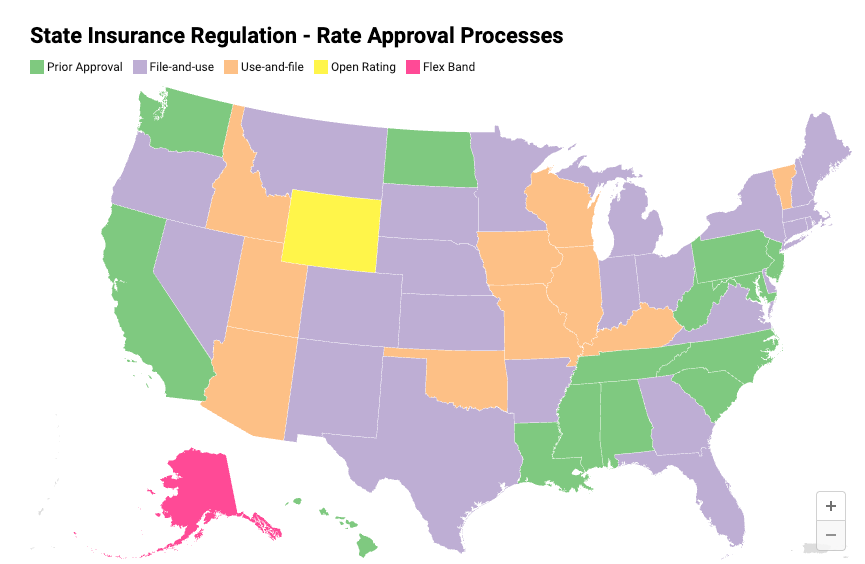
SPOTLIGHT: New Insurance Regulation Mapping Tool
Increasing pressure from rising insurance costs, elevated climate-related risks, and the growing damage caused by major disasters is shoving historically low-visibility political officeholders like insurance commissioners straight into the limelight.
A new tool from Revolving Door Project Researcher Kenny Stancil titled “Mapping Home Insurance Regulation” helps catalogue the differences between all 50 state offices charged with regulating insurance, including their budgets, staff, and authority over insurance rates.